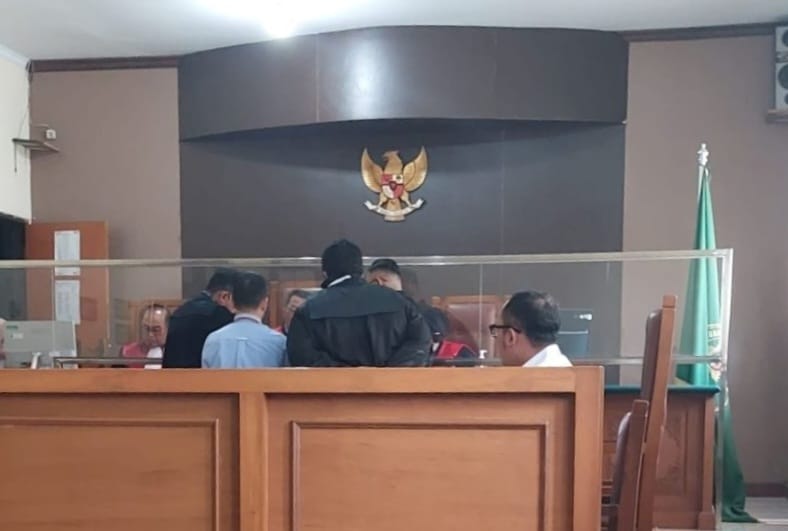
The Indonesian National Board of Arbitration (‘BANI’) has granted all claims for a Japanese property developer as a property Seller in a dispute concerning a sale and purchase agreement for an Apartment in the Southern Tangerang area. Although some provisions in the Conditional Sale and Purchase Agreement (Perjanjian Pengikatan Jual Beli, ‘PPJB’) are nulled, BANI declares that the Buyer has breached the PPJB as a written contract agreed by all parties. BANI orders the Buyer to pay off the apartment purchase transaction in full within 6 (six) months from the date of the BANI’s decision. If within 6 (six) months such obligation is not fulfilled by the Buyer, the Buyer shall be obligated to vacate the purchased apartment and surrender the apartment to the Seller.
The dispute arose from the execution of PPJB Number 29, dated March 12, 2018, regarding purchase of an Apartment in Southern Tangerang area. The arbitration tribunal examined the agreement, payment records, testimonies from all witnesses, and other evidence presented by both parties. The tribunal determined that the legal relationship between all parties stemmed from a valid and binding agreement, and that the evidence submitted by the claimant sufficiently substantiated its claims.
The Buyer involves a private Bank to provide funding in purchasing the Apartment based on a Loan Agreement signed by him as Debtor and the Bank as Creditor. After running for some months, the Debtor was no longer able to fulfill his obligations to pay the debt installments to the Creditor. The Bank (Creditor) has repeatedly requested the Debtor to fulfill his payment obligation in accordance with the credit agreement, yet the Debtor remained unable to fulfill such obligations.
Based on a Buy Back Guarantee Agreement between the Apartment Seller and the Bank, the Bank subsequently requested the Japanese property developer company to repurchase the Apartment from the Buyer (Debtor). By taking over the Debtor’s obligation, the Bank (Creditor) expected that the property developer who was initially the Apartment seller could settle all obligations of the Debtor to the Bank. This request was fulfilled by the Apartment Seller by settling all Debtor’s obligation to the Bank some months later as no positive response is given by the Debtor.
The Apartment Seller then requested the Debtor to settle their debt to them. Alternatively, the Debtor was obliged to return the Apartment back to the Seller. The Seller has sent several warning letters to the Buyer, yet this failed to yield the expected results.
BANI has finally concluded that the Buyer had breached the contract by failing to fulfill obligations as stipulated in the PPJB and failed to pay the remaining balance of his debt. BANI decided to provide a 6-month time for him to settle his debt to the Apartment Seller or empty and return the Apartment in good condition to the Seller. BANI also ordered that an official copy of the decision be registered at the South Jakarta District Court in accordance with applicable laws and regulations. In the event that the Buyer fails to perform his obligations within 6 (six) months from the date of BANI’s decision, the Seller may request the District Court to enforce and execute BANI’s decision.
In response to BANI’s decision, Donny A. Sheyoputra of SHEYOPUTRA Law Office, legal counsel for the Japanese property developer, stated, “We welcome the decision of BANI, even though our client had to exercise patience for up to six months to allow the Arbitration Respondent an opportunity to either fulfil all financial obligations or surrender the pledged Apartment unit. Had the Respondent been able to settle his obligations to the Bank from the outset, our client would not have had to assume those arrears—a step that offered no commercial benefit to our client.”
Donny Sheyoputra further noted, “Fortunately, the Arbitration Respondent ultimately recognized the importance of returning the pledged Apartment to our client, bringing this dispute to a timely resolution. The Respondent stands to benefit from this outcome, as the settlement of his obligations to the Bank as Creditor protects his reputation from the negative impact of a default on future credit assessments. Furthermore, it spared the Bank from having to engage third-party collection agencies to recover the overdue debt.”